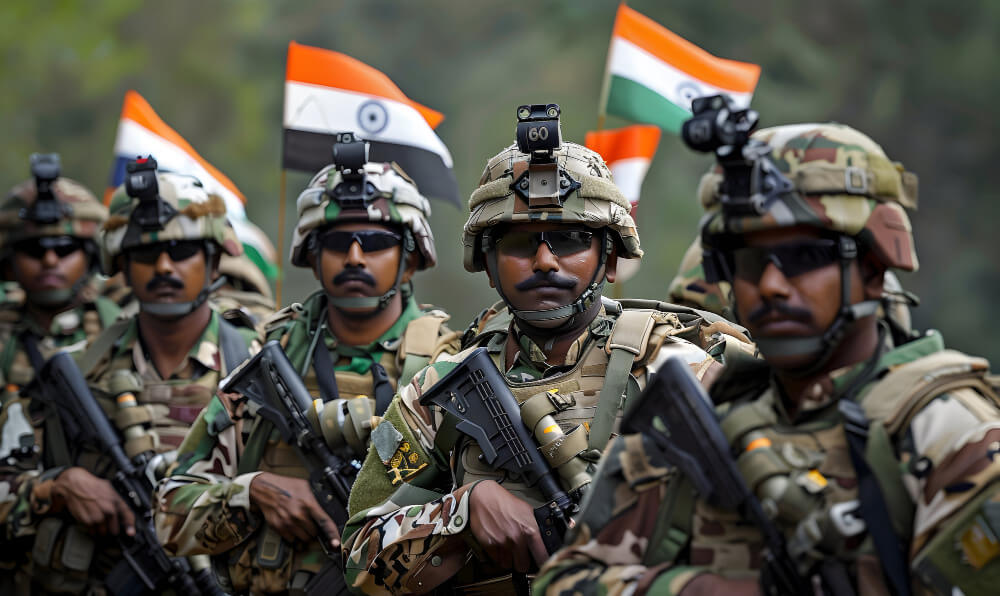
The Indian Army follows a structured and merit-based system for recruiting, training, and assigning personnel to operational units. Whether an individual joins as a soldier (Other Ranks) or as an officer, the process is designed to ensure that candidates are physically capable, mentally prepared, and professionally trained for military service.
This structured approach helps maintain discipline, operational readiness, and effective deployment across the Indian Army’s various regiments and operational units.
How the Indian Army Recruits Soldiers
The recruitment system of the Indian Army is divided into two primary entry categories:
- Soldiers (Other Ranks)
- Officers
Each category follows a different selection process depending on responsibilities and leadership roles.
Soldier (Other Ranks) Recruitment Process
Joining the Army as a soldier is the most common entry path. Recruitment typically takes place through regional recruitment rallies known as Army Bharti.
Recruitment Notification and Rally Announcement
The Indian Army regularly publishes recruitment notifications for different regions of the country. These recruitment drives are organized locally to attract candidates from various states.
Eligibility Requirements
To apply for soldier positions, candidates must meet several eligibility criteria.
Age Requirement
- Generally between 17.5 and 21 or 23 years, depending on the specific role.
Educational Qualification
- Typically 10th or 12th pass, depending on the trade or position.
Physical Standards
- Height, chest measurement, and weight standards vary based on region and category.
Physical Fitness Test (PFT)
Candidates must pass a physical fitness assessment designed to test endurance and strength.
Common tests include:
- 1.6 km timed run
- Pull-ups
- Balance and agility tests
These tests ensure candidates have the physical capability required for military service.
Physical Measurement Test (PMT)
Candidates who pass the fitness test undergo physical measurement verification.
This includes:
- Height measurement
- Chest expansion check
- Weight verification
These measurements must meet the Army’s standards.
Medical Examination
Candidates undergo a comprehensive medical examination to assess overall health.
The evaluation includes:
- Vision and eyesight tests
- Hearing ability
- Physical health assessment
- General medical fitness
Only medically fit candidates proceed to the next stage.
Written Examination (CEE)
Candidates then take the Common Entrance Exam (CEE).
The exam typically includes questions on:
- General knowledge
- Mathematics
- Logical reasoning
Performance in this exam contributes significantly to the final selection process.
Final Merit List
The Indian Army prepares a final merit list based on overall performance across all stages.
Candidates who rank high enough in the merit list are selected for training.
Officer Recruitment in the Indian Army
Officers are responsible for leadership, planning, and operational command roles within the Army.
There are several entry routes for officer-level positions.
Major Entry Routes
National Defence Academy (NDA)
Candidates can join after completing their 12th grade.
Combined Defence Services (CDS)
Graduates can apply through this entry route.
Technical Entry Scheme (TES)
Engineering students may apply through specialized technical entry programs.
Service Selection Board (SSB) Interview
Candidates who qualify for officer selection must appear before the Service Selection Board (SSB).
The SSB process lasts approximately five days and evaluates leadership potential, personality, and decision-making abilities.
The assessment includes:
- Psychological tests
- Group tasks and leadership exercises
- Personal interview
Medical Examination and Final Selection
Candidates who successfully pass the SSB must undergo a medical examination.
Final selection is based on a combined merit list, considering written exam performance, SSB results, and medical fitness.
Training Process in the Indian Army
After selection, candidates undergo rigorous training to prepare them for operational roles.
Training differs for soldiers and officers.
Soldier Training
Soldier training typically lasts between six months and one year, depending on the role and specialization.
Training Centers
Training takes place at regimental centers such as:
- Sikh Regiment Centre
- Gorkha Training Centre
- Other regimental training facilities across India
Basic Military Training
Initial training focuses on fundamental military skills including:
- Discipline and military drill
- Physical fitness and endurance
- Weapon handling and safety
Field Craft and Combat Tactics
Soldiers are trained in battlefield operations including:
- Camouflage techniques
- Patrolling strategies
- Basic combat tactics
Weapons and Firing Training
Soldiers learn to operate military weapons and participate in:
- Live firing exercises
- Battlefield simulations
Specialized Training
After basic training, soldiers may receive specialized instruction based on their assigned role, such as:
- Infantry operations
- Signals and communication
- Artillery support
Officer Training
Officers undergo more extensive training focused on leadership and strategic planning.
Major Training Academies
Officer training is conducted at institutions such as:
- Indian Military Academy (IMA), Dehradun
- Officers Training Academy (OTA), Chennai
- National Defence Academy (NDA), Pune
Training Duration
Training length varies depending on entry route:
- NDA: 3 years at NDA plus 1 year at IMA
- CDS or Direct Entry: Approximately 1 year
Training Focus
Officer training includes:
- Leadership development
- Military strategy and tactics
- Military law
- Advanced field operations and weapons systems
How Soldiers Are Assigned to Units
Assignment within the Indian Army follows a structured system.
It is not random and is influenced by several factors.
Regimental System for Soldiers
India follows a regimental system, which plays an important role in unit assignments.
Soldiers are recruited into specific regiments such as:
- Rajput Regiment
- Sikh Regiment
- Gorkha Rifles
In many cases, recruitment may consider:
- Region
- Language
- Ethnic background (in certain regiments)
Posting Process
After completing training:
- Soldiers are posted to their parent regiment.
- They are then assigned to a specific battalion or unit.
Over time, soldiers may receive transfers based on:
- Operational requirements
- Experience level
- Promotions
Officer Unit Assignment
Officers are assigned to units based on several factors.
Allocation Criteria
Assignments may consider:
- Merit ranking during training
- Personal preferences (when possible)
- Operational requirements of the Army
Branch and Regiment Allocation
Officers are first assigned to a branch such as:
- Infantry
- Armored Corps
- Engineers
- Signals
They are then commissioned into a specific regiment and posted to a battalion.
For example, an officer may be commissioned into the Infantry → Sikh Regiment → specific battalion.
Career Movement in the Indian Army
Throughout their careers, soldiers and officers typically rotate between different postings.
These may include:
Field Postings
- Border areas
- Active operational zones
Peace Postings
- Training institutions
- Headquarters assignments
Promotions, experience, and specialization influence future postings and responsibilities.
Conclusion
The Indian Army follows a well-structured recruitment, training, and assignment system designed to ensure that personnel are prepared for the demands of military service. From rigorous selection processes to comprehensive training and structured unit assignments, every stage is focused on building a capable and disciplined fighting force.
This systematic approach allows the Indian Army to maintain operational readiness while developing skilled soldiers and capable leaders who can serve effectively across diverse missions and environments.